
Watch/listen to Kevin read “Sabbatical”
Sabbatical
Between Sunday October General Conference Sessions

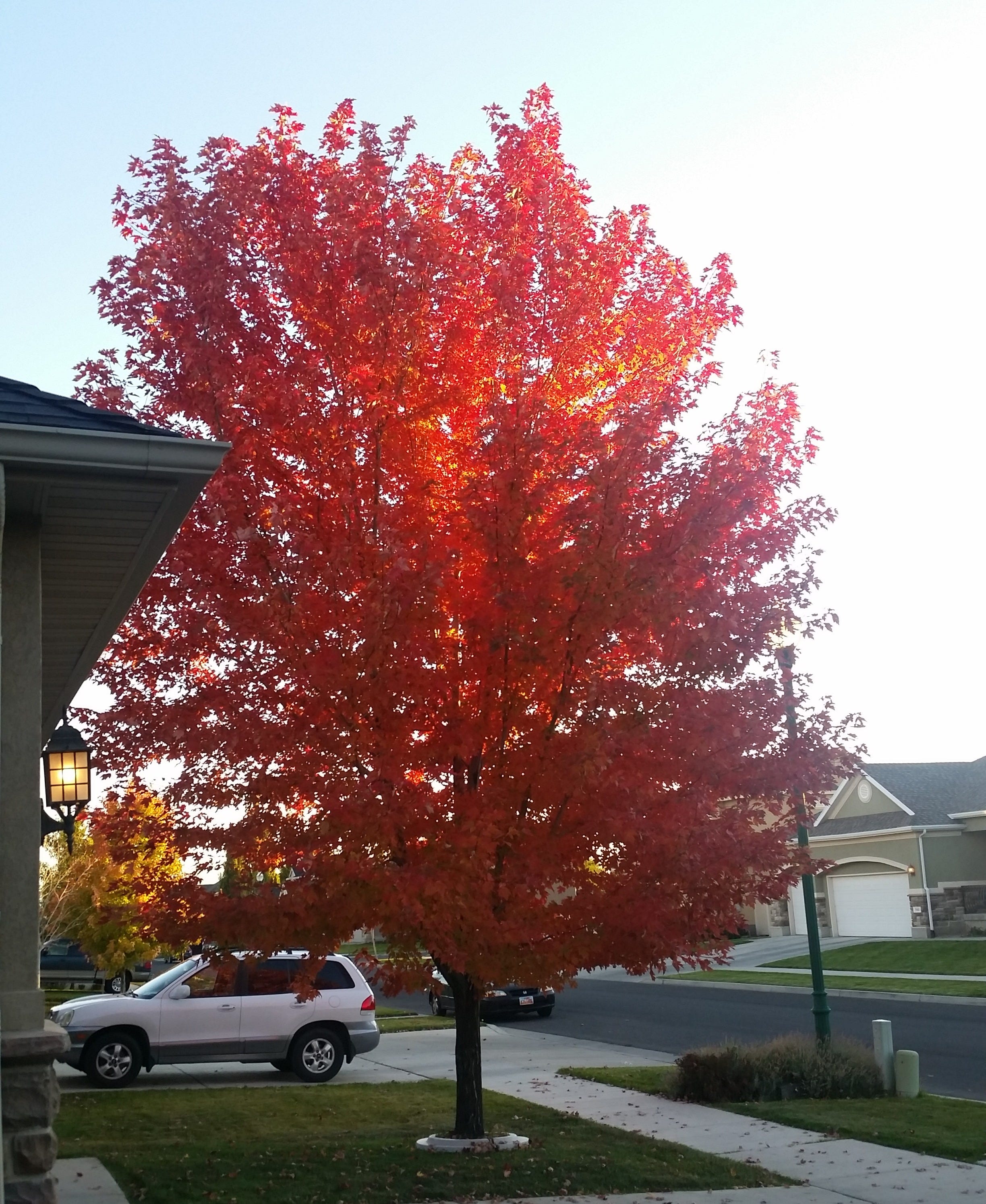
A hot fall day, tree shade still inviting,
flames atop only the tallest maples.

The same sunlight that lifts my chin
fed ferns once, then dinosaurs, then
it rested.
                      Rested into oil
and returned as fire through sky
in the airplane’s drone that emerges,
as it always does, from the amber
quiet of closed eyes.

Just once, to be nothing
but a part of creation, not always
its fervent purpose, Thy work and glory.
For now, to be no more important
or eternal than this late-morning
chatter of birds.

My soul, let go of salvation,
of principles and ordinances.
Rest from your faith and works.
Lose them all for this moment
so you may find them.
See a sample of the book
Intro, TOC, and 10 of the 40+ poems

Notes on “Sabbatical”
Backstory
As the subtitle indicates, the impression from this poem came as I stood on our back porch soaking up warmth in between October Conference sessions in 2018. I’d been reading about mindfulness and was struck in that moment by the idea of being spiritually reborn as a process of dying to the things of this world–even good things—so that we can make room for the better things God has in store. It’s that Augustinian notion of approaching the Lord empty-handed. I can barely stand the word “vulnerable” anymore because of how mercenarily people employ it in their rhetoric, but birth is the epitome of it (vulnerability, not rhetoric): newborns of course have no possessions or accomplishments or righteousness or worthiness to commend themselves to us or to God. We honor and cherish them because we can’t help ourselves – that’s just what you do with babies. In part, to be born again spiritually is to put this degree of irreducible trust in the relationship that exists between us and God, and to a lesser extent our faith community. It’s a huge risk, because if adults don’t take care of newborns, they die.
Form & Techniques
This is a free-verse poem. Its last line is meant to suddenly and completely reverse the poem’s seemingly religion-rejecting trajectory. If we all must be born again, even those of us who’ve “grown up in the Church,” then this poem is an exploration of what that can look like. And maybe it’s not a singular event, or an ongoing process: maybe it happens time and time again in discrete and definite iconoclastic moments, smashing the idols we construct, Babel-like, through our own worship. That’s an important part of worship.
Explanations
Lines 3-7: The conservation of energy fascinates me. Nuclear energy in the sun’s fusion is converted to chemical energy in plants, then in the animals that eat them, and that chemical potential energy is in turn converted over millions of years into fossil fuels. In terms of size and time, humans occupy such a tiny tiny speck.
13 – Thy work and glory: A reference to the familiar Moses 1:39 – “For behold, this is my work and my glory: to bring to pass the immortality and eternal life of man.” Making ourselves so important in God’s eyes – as His beloved children – can be exhausting, especially if you can’t help transferring some of your imperfect earthly familial relationships, with their codependency, unreasonable expectations, and tendency for disappointment, onto God.
Buy the Book
Available from Greg Kofford Books on their website and Amazon. $9.95

And check out the rest of Greg Kofford Books’ fantastic catalog:
